Will AI Replace Jobs in the Philippines? Why Relevance Is the Real Answer

Something I am starting to observe in the businesses I work with across the Philippines: the fear of AI is pointed in the wrong direction.
Most people are worried about the technology. They want to understand what AI can do. They ask whether ChatGPT will replace their team. They ask whether their industry is next.
But the worry should not be about AI. AI is a tool. It does not have a strategy. It does not decide who gets hired and who gets let go. The people making those decisions are executives looking at a cost structure, a revenue target, and a workforce where some roles have not changed in years.
When Klarna’s CEO Sebastian Siemiatkowski told CNBC in 2025 that AI helped shrink his company from about 5,000 to 3,000 employees, he was not describing a machine that woke up one day and decided to eliminate jobs. He was describing a deliberate business decision: replace attrition with AI, freeze hiring, automate what can be automated. The roles that disappeared were roles built around repetitive tasks that AI could handle faster and at lower cost.
That is the pattern. And it is not stopping.
The Real Disruption Is Not AI — It Is Stagnation
In the Philippines, many of our largest employment sectors are built on process execution. Data entry. Document processing. Customer service. Call center work. Logistics coordination. These are not bad jobs. Millions of Filipinos built careers and supported families through these roles.
But many of these roles have not changed in ten years. The skills required today are the same skills required in 2015. And that is the problem.
AI does not fire people. Obsolete skills do.
When a company looks at a team doing a task that AI can now do in a fraction of the time, the business decision becomes straightforward. Not necessarily ethical. Not necessarily fair. But straightforward.
UPS cut 48,000 jobs in 2025 as part of what it called its “Network of the Future” program. The company closed 93 facilities and integrated AI-based routing and automated sorting systems. Many of the workers affected were in roles that had stayed the same while the technology around them changed entirely.
Duolingo’s CEO Luis von Ahn wrote in an April 2025 note to employees that AI “is already changing how work gets done.” He said Duolingo would stop using contractors for any work AI can handle, and that headcount would only grow in teams that could demonstrate they had already maximized automation. He called it a “platform shift,” similar to the company’s earlier bet on mobile.
This is happening across industries. Not just in tech. Not just in Silicon Valley. Cisco cut nearly 4,000 positions in May 2026 while simultaneously reporting record quarterly revenue of $15.8 billion. The company was profitable. It still restructured.
The Klarna Lesson: Companies Are Still Learning, But Workers Carry the Risk
One important nuance worth naming here: AI is not always as good as the headlines suggest.
Klarna eventually reversed some of its cuts. After replacing about 800 customer service agents with AI, the company saw customer satisfaction scores drop and complaint rates rise. By early 2026, it was rehiring human staff. CEO Siemiatkowski publicly acknowledged the aggressive AI transition had hurt service quality.
This is worth sitting with for a moment. Companies are running experiments. Some work. Some do not. But the workers caught in those experiments — the ones let go during the transition — still lost their jobs. The rehiring that follows does not bring the same people back.
The lesson from Klarna is not that AI will fail and everyone can relax. The lesson is that companies will keep making these bets, workers without evolving skills are the ones at risk during each wave, and relevance is the only durable protection you have.
What This Means for Filipino Professionals
The Philippines has built a services economy on the back of a disciplined, English-proficient workforce. That has been an edge. It still is. But that edge sharpens or dulls based on what each worker decides to do with it.
The roles at highest risk are not the hardest jobs. They are the jobs that have been reduced to a predictable sequence of steps. If your entire value to an employer is executing a known process reliably and without error, AI can now do that. Faster. Cheaper. Without sick leaves or overtime.
This is especially true in BPO, shared services, document processing, and entry-level white-collar work. These sectors employ hundreds of thousands of Filipinos. They are not disappearing overnight. But they are contracting. And the workers who will stay employed are the ones who have moved up the stack — from execution to judgment, from following instructions to designing better ones.
That shift is available to anyone willing to make it. It is not about becoming an engineer. It is about learning to think with AI.
Three Things You Can Do Starting This Week
Use AI in your current job before your employer asks you to. Do not wait for a training program or a directive from above. Pick one repetitive task you do today and figure out how to do it faster using an AI tool. This is not about impressing anyone. It is about building fluency before the pressure arrives. The professionals who will lead AI transformation in their organizations are the ones who already know what the tools can and cannot do.
Move from executing tasks to designing them. Ask yourself: what is the thing I do that requires a human to decide? Not just follow a checklist — but actually think, judge, and adapt. That is your edge. Spend more of your time there. Delegate the execution, even if you are delegating to a tool. The goal is to stop being the person who does the work and become the person who decides how the work should be done.
Treat AI adoption as a career investment, not a job requirement. The Filipino professionals I see in PAIBA workshops who are moving fastest are not the ones with the most technical backgrounds. They are the ones who decided early that learning AI was their responsibility, not their employer’s. They did not wait to be trained. They trained themselves, showed results, and now lead their teams through the transition.
Relevance is not a passive outcome. It is a decision you make repeatedly, in small ways, every week.
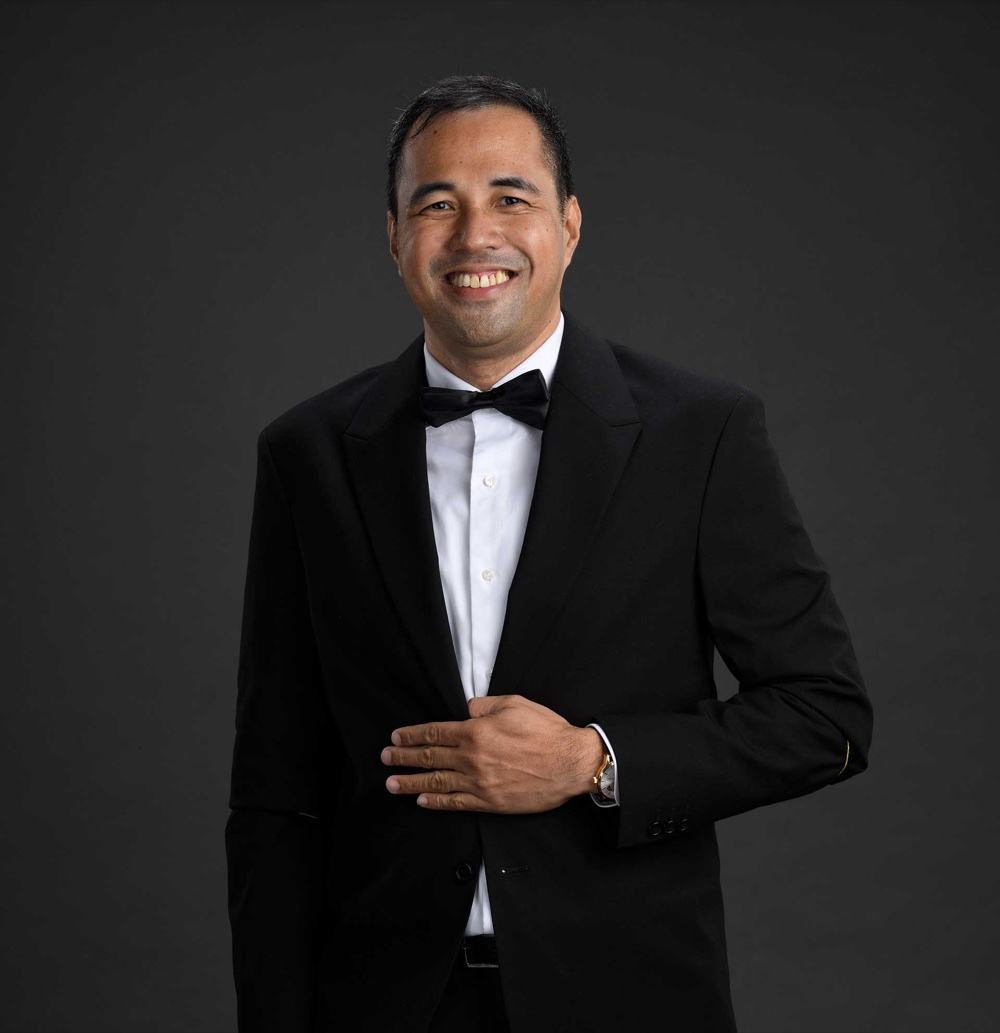
Jerry Ilao
AI Business Strategist · Creator of The 4A Blueprint
Jerry Ilao is the founding president of the Philippine AI Business Association (PAIBA), co-founder and CEO of AI consulting company Olern, and co-founder of Tarkie, field-work software used by 15,000+ Filipinos. He has led 200+ digital transformation projects since 2014 and now helps Philippine businesses adopt AI through The 4A Blueprint™, his practical framework for progressing from AI assistants to automation, agents, and AI-first operations.