Why BPO Workers Are Saying Yes to Hybrid: What It Tells Us About AI Jobs in the Philippines

In the Philippines, BPO workers who once treated full-remote work as non-negotiable are now voluntarily accepting hybrid setups and career shifts. Interviews with candidates in 2025 and 2026 suggest the driver is not financial pressure but concern about long-term career durability in a workforce increasingly shaped by AI. For business leaders, the behavioral shift is an early signal worth reading.
Something tells me a shift is starting to happen.
This week, we interviewed two applicants who spent the last four years in the BPO industry. They came in with the profile you would expect: full-remote experience, flexible hours, solid benefits. The kind of candidates who, a year ago, would have walked out of a conversation the moment hybrid was mentioned.
Both said yes to hybrid. One asked, without prompting, whether we used AI tools — not to avoid them, but to understand what they would be working alongside.
A year ago, this would have been unlikely.
What changed in the BPO applicant market
For most of 2023 and into 2024, the applicant market in the Philippines tilted toward candidates with BPO experience. They had leverage, and they used it. Full remote was the baseline ask. Hybrid was a deal-breaker. Onsite was a non-starter.
By late 2025, something started to move. Offer acceptance patterns shifted. Candidates who had been firm on remote started entertaining hybrid arrangements. The easy explanation is supply and demand: more applicants, flatter demand, people take what they can get.
That story is incomplete.
When we asked both candidates directly what changed their thinking, neither cited financial pressure as the primary reason. What they described was closer to uncertainty. About where their current role category was heading. About whether the skills built over four years in BPO would still be in demand in two more. One of them used the phrase “long-term opportunity” unprompted.
That is not a labor-market conversation. That is a career-durability conversation.
How AI is reshaping how workers think about AI jobs in the Philippines
The Philippine BPO industry has navigated major transitions before. The shift from voice to non-voice work. The move from domestic to offshore delivery. Each time, the workers who adapted earliest were the ones who read the environment before the full curve arrived.
What we are seeing now has a different texture. AI is not eliminating BPO roles overnight — anyone claiming that is overstating both the timeline and the current capability. But AI is already changing what high-value BPO work looks like, and the workers paying attention know it.
Full-remote, process-repetitive, isolated roles are starting to look fragile. Not because they are disappearing this quarter, but because workers can see the trajectory. Hybrid, varied, human-adjacent work — the kind that involves judgment, context-switching, and collaboration — is starting to look more durable.
This is why candidates with four years of BPO experience are willing to relocate to Pasig for a hybrid setup. They are not running from AI. They are running toward environments where they can stay visible, keep learning, and build adjacent skills before the curve fully arrives.
Is it market conditions driving this shift? Probably, in part. Is it career growth concern? Yes. Or is AI beginning to reshape how workers in the Philippines think about which environments actually protect long-term opportunity? All three can be true at once.
The more useful question for leaders is this: are we paying attention to the early signals?
What this means for leaders hiring in this environment
Most organizations track hiring outcomes — acceptance rates, time-to-hire, offer-to-join conversion. These are lagging indicators. By the time they show a pattern, the environment has already shifted.
The signal in these two interviews is not in the acceptance. It is in the reason. Two BPO veterans gave the same unprompted answer in the same week. That is worth writing down.
Here is what leaders can do with this kind of early signal.
Pay attention to what candidates volunteer, not just what they answer. Interview data is typically structured around questions you ask. The richest signal often comes from what candidates say on their own. A candidate who brings up AI tools, long-term learning environments, or “where this industry is heading” without being asked is telling you something about what is driving their decision-making. Document it.
Ask the question directly. “What made you reconsider a hybrid setup after working fully remote for four years?” is a question most hiring managers do not ask. They should. The answers reveal what candidates are actually worried about, which is more actionable than any exit survey. People are honest when they are trying to get a job.
Map AI exposure in the roles you are offering. If candidates are beginning to factor in AI proximity as a career consideration, it is worth asking whether the roles you are hiring for actually deliver on that. Hybrid alone is not the draw. The draw is meaningful work in an environment where AI is visible, learnable, and integrated into daily tasks. If your hybrid roles are just remote roles with commute days added, the signal will not hold.
Build onboarding that reflects the AI environment candidates are looking for. At Olern, the pattern we see in successful AI integrations is that the first 90 days set whether employees feel the AI environment as an asset or a threat. If candidates are joining partly because of AI growth opportunity, the onboarding should confirm that bet early. A new hire who sees AI tools used visibly and well in week one is far more likely to develop the same habits.
Where to start this week
Pick one open role in your pipeline. Look at the last three candidates who accepted offers and the last three who declined. Call one of the declines and ask a single question: what drove the decision?
You are not conducting research. You are calibrating your read of a market that is moving. Two conversations will tell you more than six months of aggregate data.
And if you lead a BPO or outsourcing operation and want the operational side of this transition — where AI should handle, assist, or stay out of service delivery — the AI for BPO in the Philippines playbook maps 15 practical use cases, from agent assist and QA to knowledge, back-office automation, and AI Agents.
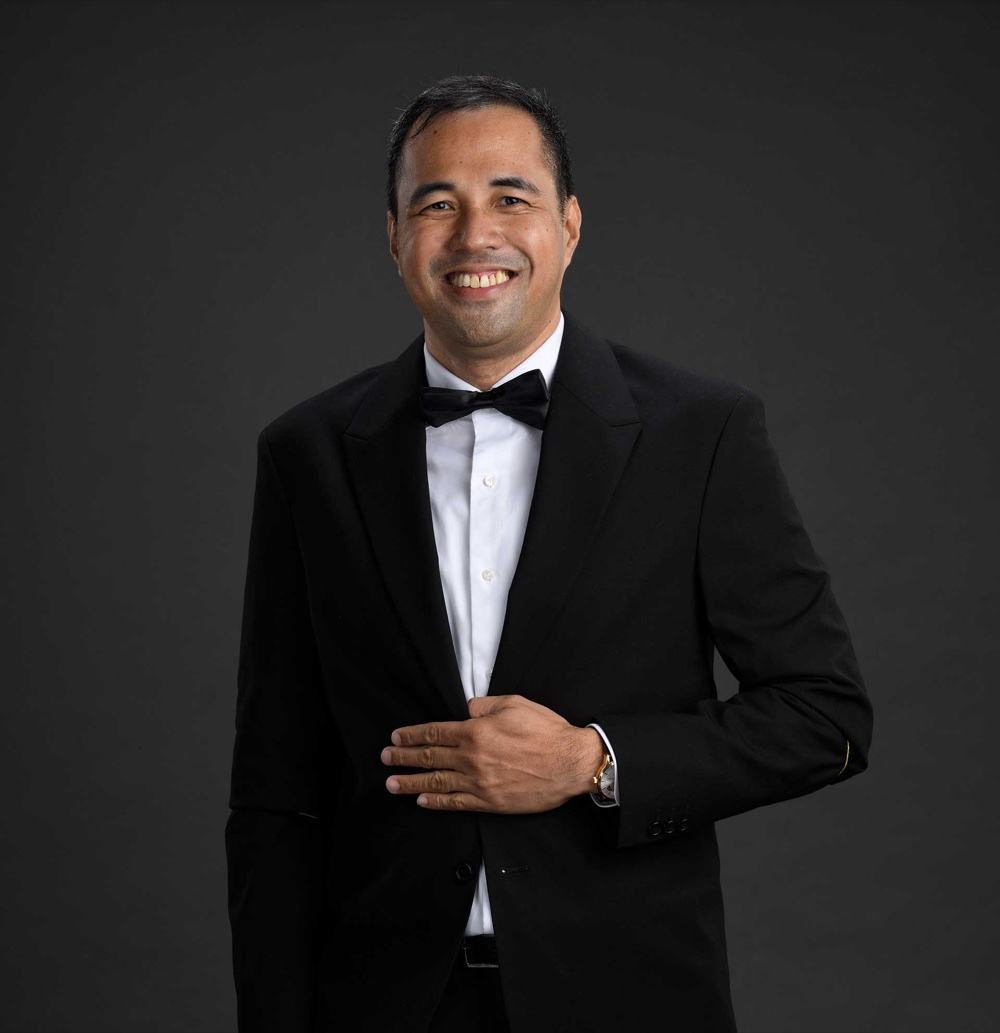
Jerry Ilao
AI Business Strategist · Creator of The 4A Blueprint
Jerry Ilao is the founding president of the Philippine AI Business Association (PAIBA), co-founder and CEO of AI consulting company Olern, and co-founder of Tarkie, field-work software used by 15,000+ Filipinos. He has led 200+ digital transformation projects since 2014 and now helps Philippine businesses adopt AI through The 4A Blueprint™, his practical framework for progressing from AI assistants to automation, agents, and AI-first operations.