Play Bigger with AI: What PrintCon 2026 Means for the Philippine Print Industry
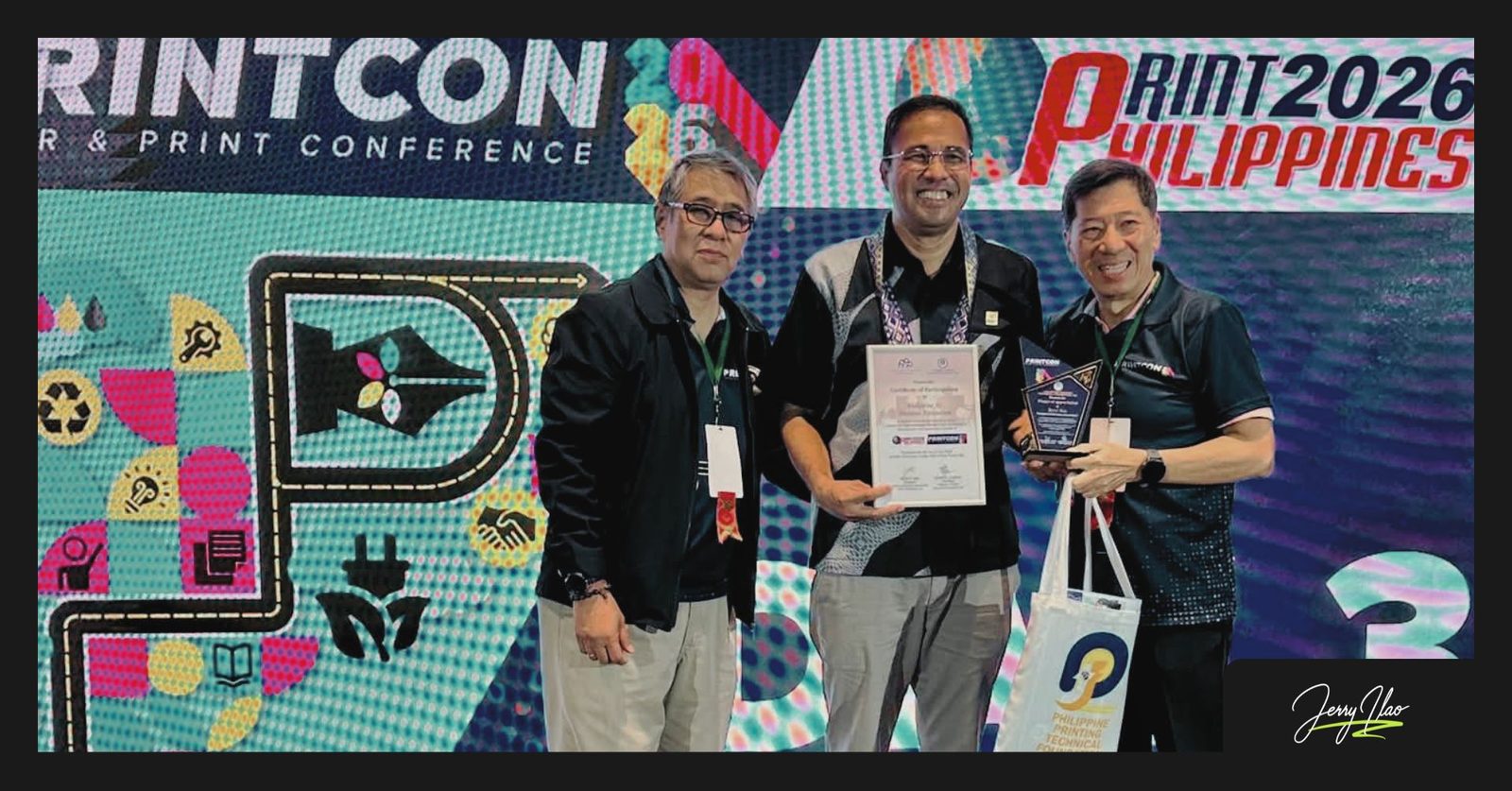
Thank you so much, PrintCon 2026.
I want to start there because that’s genuinely how I feel about it. Writing this is my way of saying thank you properly, with room to explain why it matters.
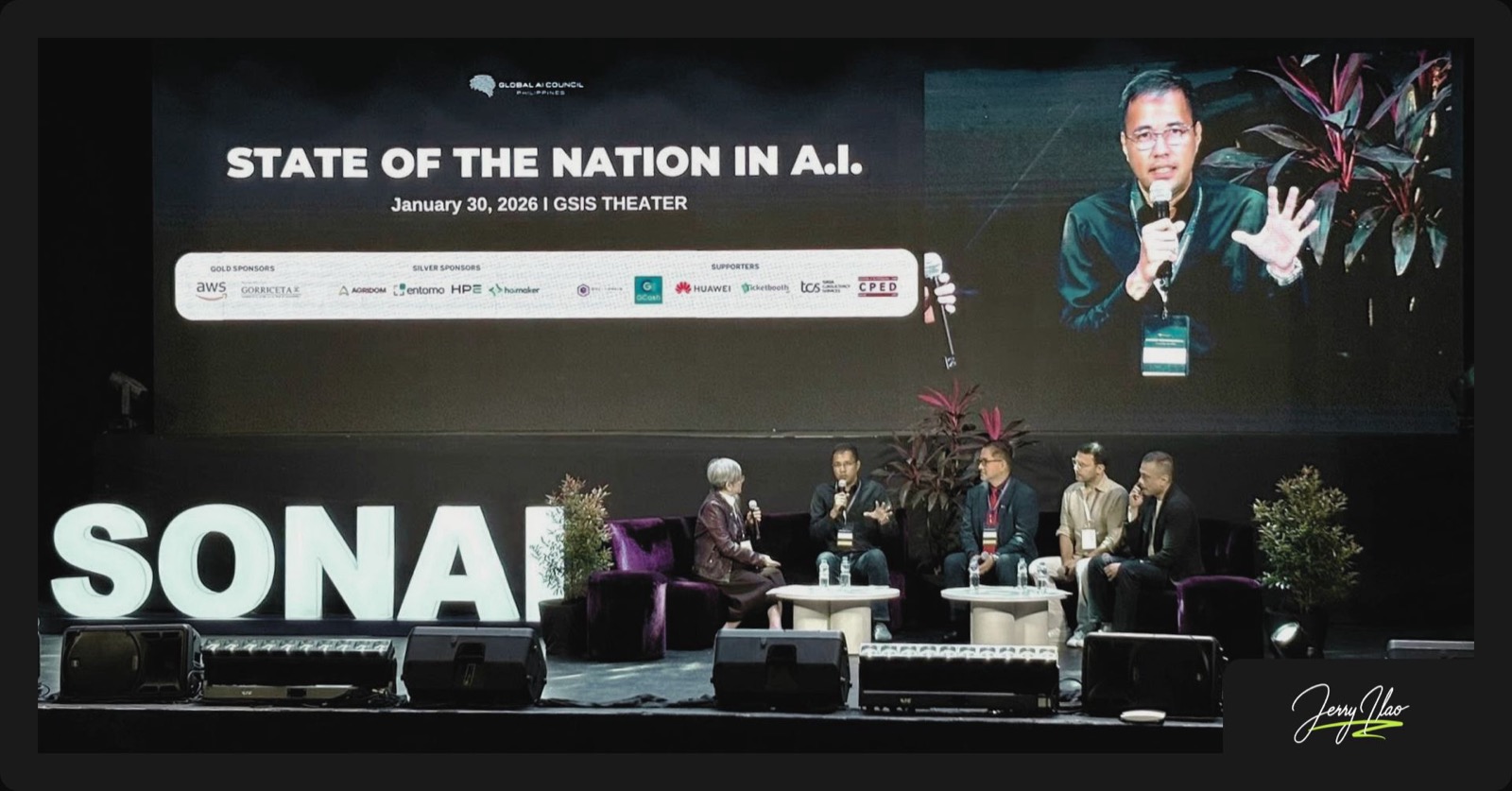
PrintCon 2026 was the first time the Philippine Printing Technical Foundation (PPTF) and the Printing Industries Association of the Philippines (PIAP) ran a unified trade show together. Three days at the SMX Convention Center in Pasay City, exhibitors and industry leaders and educators and government agencies all under one roof, built around a theme that would have sounded unusual in this industry even five years ago: artificial intelligence. I was invited to speak about AI for the print industry, and what I found in that room told me something about where Philippine business is headed.
What stood out to me at PrintCon 2026
What stood out to me was not the technology. It was the room.
I have spoken to a lot of business audiences about AI. Some rooms are polite. Some are skeptical. Some are there because their boss told them to attend. PrintCon 2026 was different. The energy and enthusiasm of the attendees was real, and it showed in the questions. People wanted to know how AI could help their specific press, their specific workflow, their specific team of ten or twenty people who have been doing things one way for years.
That’s always a good sign. When a room stops asking “should we do this” and starts asking “how do we do this,” the adoption conversation has already shifted.
Print is one of the oldest trades in Philippine business. Many people still picture it as ink, paper, and machines that have not changed in decades. And that is still worth paying attention to, because the equipment side of print has not disappeared. But the conference itself was built to challenge that picture. AI was framed by the organizers not as a threat to the craft, but as something that helps the industry compete, personalize, and move faster without losing what makes print valuable in the first place.
Why the print industry is having its AI moment now
You have probably seen this pattern before in other industries, di ba? A sector everyone assumed was settled, then something forces a reckoning with new technology.
For print, that reckoning is showing up at the highest level of the industry’s own institutions. A merged trade show. A government official pushing modernization. A full learning track built around AI integration. That is not a coincidence.
PrintCon 2026 and Print Philippines 2026 combined into a single trade show for the first time. For years the two events ran separately, which meant exhibitors paid for booths twice, sponsors split their budgets twice, and buyers had to choose which show to attend instead of seeing the whole industry in one place. Merging them was a practical decision as much as a symbolic one: fewer duplicated costs, one shared platform, a stronger and more unified voice for printing professionals across the country.
During the event, DTI Undersecretary Blesila Lantayona pushed the industry to keep building one that is “innovative yet responsible, competitive yet inclusive, and profitable yet sustainable.” That is not corporate language. That is a government official telling an entire trade to modernize without losing its values.
The organizers backed that up with specifics. PTTC’s Kyrin Christian Pango, speaking on the AI integration track, said the goal was to “humanize AI, with AI doing routine work,” while leaving critical thinking and client relationships to people. That framing matches what I told the room at PrintCon 2026. AI is where the manual, repetitive parts of running a print business go, so the people running that business can spend their time where judgment still matters.
Adoption over tools, even in print
This is where AI becomes useful for a print business, and it is not the part most owners expect.
Most conversations about AI and print jump straight to design generation or automated proofing. Those tools matter. But the bigger bottleneck I see across every industry, print included, is not tool availability. It is organizational adoption. A press owner can buy the same AI subscription as a competitor. What decides who actually gets value from it is whether the team around that tool changes how it works.
We cannot do this alone, and no press owner should have to figure out AI adoption by trial and error while also running daily production. This is exactly why PAIBA exists, and why events like PrintCon 2026 matter enough for us to show up with a booth and a full day of conversations. No SME should be left behind because AI adoption looked too technical or too expensive to start.
What this looks like in an actual print shop
Let me make this concrete, because “AI for the print industry” can sound abstract until you break it into the tasks a real shop does every day.
Client quotations are usually the first place I point owners toward. A print shop can get dozens of quote requests a week, each with different paper stock, quantity, finishing, and turnaround combinations. An AI tool trained on your own price list and past quotes can draft the first version of that quotation in minutes instead of the twenty or thirty it usually takes a staff member to calculate by hand. The staff member still reviews it. The AI just removes the blank-page problem.
Job costing works the same way. Every print job has a true cost once you add materials, machine time, and labor, but many shops still estimate this from memory or from a spreadsheet nobody has updated since last year. AI can pull from your actual purchase records and flag when a job’s real cost has drifted from what you quoted for it, which matters more now that paper and ink prices move faster than they used to.
Design and prepress support is where most people’s minds go first, and for good reason. AI-assisted layout checks, color separation reviews, and file-error detection catch mistakes before they reach the press, where a mistake is expensive in a way it never is on a screen. This is not about AI replacing a designer’s eye. It is about catching the file error at 9 a.m. instead of after a thousand sheets have already run through the machine.
And then there is the client-facing side. A basic AI assistant that answers “where is my order” or “can you rush this” questions, trained only on your own order data, frees up whoever currently spends their afternoon on the phone repeating order statuses. That person can go back to selling, or to solving the harder client problems that actually need a human.
None of these examples require the print shop to become a technology company. They require picking the task that already eats the most hours and pointing a tool at it.
What to watch out for
A caution here, because I would rather be honest than hype this up.
Not every AI tool sold to a print business will fit a print business. A generic AI assistant built for retail or software companies will miss the specifics of press scheduling, materials sourcing, and client proofing cycles that make this industry different. Buying a subscription is not the same as building a workflow around it. Responsible use also matters more here than in most industries, because a printed product is often the permanent, physical output of a client relationship. Mistakes do not get quietly edited later.
There is also a generational piece to this, and it matters as much as the technology does. Many press operators and production staff have run the same machines the same way for twenty or thirty years. Asking them to trust an AI-generated quotation or a flagged cost discrepancy is not a training problem you solve in one afternoon. It is a leadership problem you solve by showing, not telling. Run the AI tool alongside the old method for a few weeks. Let the team see both outputs side by side before asking anyone to trust the new one on its own.
Where to start this week
If you run a print business and left PrintCon 2026 curious but unsure where to begin, here is what I would actually do.
Pick one repetitive task, not your whole operation. Client quotation drafts, proof-status updates, or job-costing summaries are common places where AI can save real hours without touching the craft side of the business.
Bring one person into the pilot, not the whole team. Choose whoever already handles that repetitive task and let them test the tool for two to three weeks before deciding whether to roll it out further.
Measure the hours saved, not the hype. Write down what the task used to take and what it takes now. That number convinces the rest of the team, not a demo.
Ask PAIBA or your industry association before you buy anything. Responsible AI adoption benefits from a second opinion, especially in an industry where most AI vendors do not understand press operations.
The people who made PrintCon 2026 work
None of this happens without the people who build these rooms.
Thank you again to PrintCon 2026, and to Kervin Valero and Leah Guba Ayeng for the invitation to speak about AI for the print industry. Thank you to Dir. Josie Co See, Membership Chair Ferdie Laureta, Jaana Fernandez-Abrogena, Aldrich Abrogena, and Raab Hizon for volunteering to man the PAIBA booth and patiently answer every question about AI and PAIBA that came their way that day.
I am very grateful for the opportunity to connect with leaders in the print industry, and I hope more of them play bigger with AI because of it.

Jerry Ilao
AI Business Strategist · Creator of The 4A Blueprint
Jerry Ilao is the founding president of the Philippine AI Business Association (PAIBA), co-founder and CEO of AI consulting company Olern, and co-founder of Tarkie, field-work software used by 15,000+ Filipinos. He has led 200+ digital transformation projects since 2014 and now helps Philippine businesses adopt AI through The 4A Blueprint™, his practical framework for progressing from AI assistants to automation, agents, and AI-first operations.