From AI Training to Microsoft Copilot Agents: Republic Cement's AI Champions Journey
Republic Cement is one of the Philippines' major building-materials companies, with roots dating back to 1955. It operates five integrated cement plants and one grinding station, with a total cement capacity of 9.7 million tonnes per year, and is backed by global building-materials group CRH and the Aboitiz Group.
- Engagement
- Advanced AI Workshop for AI Champions
- Platform
- Microsoft Copilot
- Earlier engagement
- AI Workshop for HR Managers and Directors, October 2025
- Advanced workshop
- July 2026
- Facilitator
- Jerry Ilao
~40 minutes → under 5
A recurring daily report, handled by a Copilot agent built during the workshop and checked against the source data.
AI Champions left with Version 1
Participants submitted their agent ideas before the session, received customized implementation guidance, and built first working agents in the room.
Invited back for the advanced stage
After an October 2025 workshop for HR managers and directors, Republic Cement brought Jerry back in July 2026 for its AI Champions.
From learning about AI to building with it
Republic Cement's AI journey with Jerry Ilao did not begin with AI agents. In October 2025, Jerry conducted an AI workshop for the company's HR managers and directors — the kind of department-level capability building mapped in AI for HR in the Philippines.
Several months later, Republic Cement had established an internal AI Champions initiative as part of its own AI journey, and invited Jerry back for a more advanced engagement. This time, the objective was different.
The July 2026 workshop was designed to help Republic Cement's AI Champions move beyond using Microsoft Copilot primarily as a chat assistant and begin building reusable AI agents around real business work.
Republic Cement's own IT leadership described the company's AI Champions as people who would help identify where AI could create value and encourage wider adoption across the organization. The July session was positioned as the next stage of that journey: an AI upskilling workshop focused specifically on building agents.
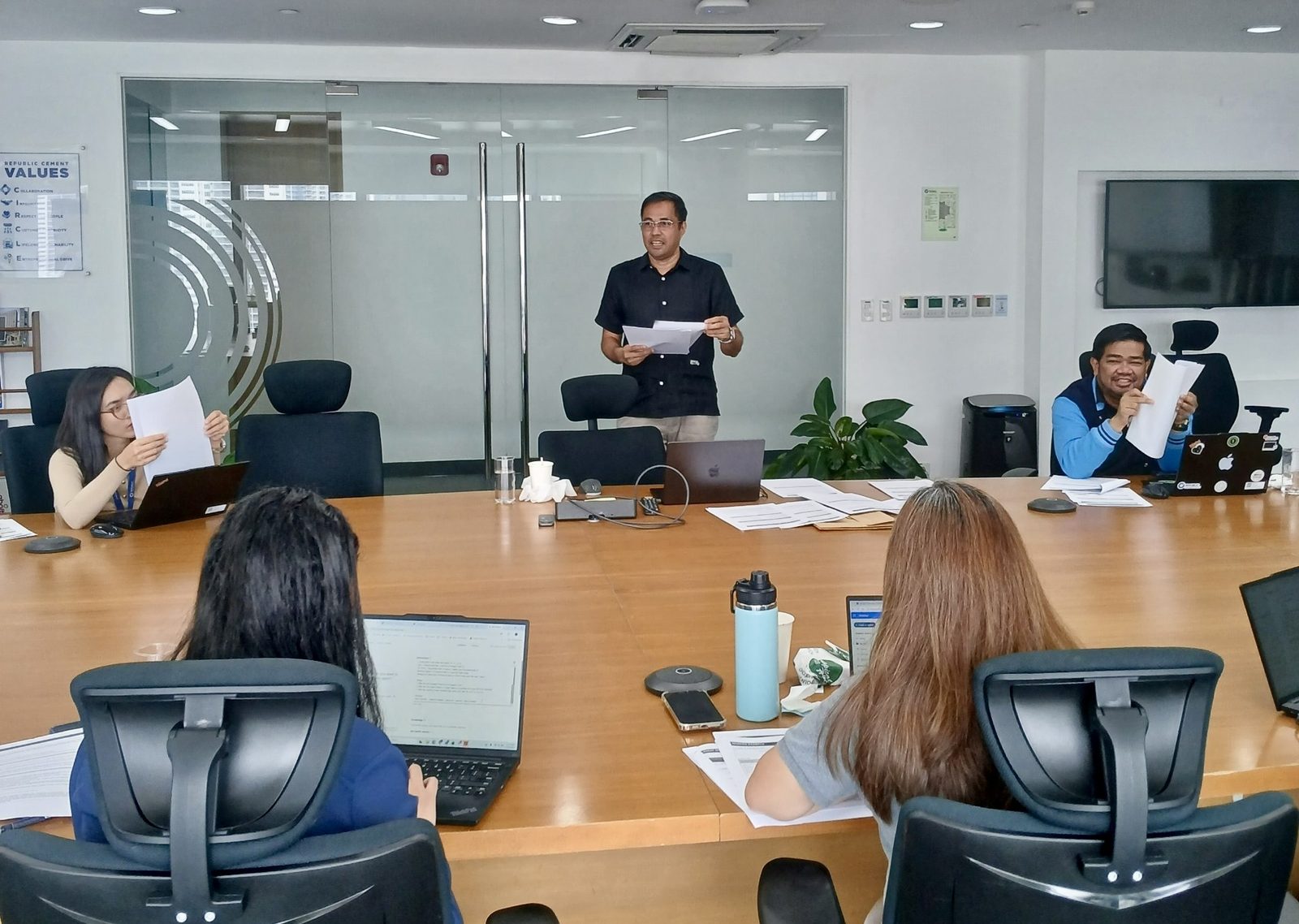
The enterprise challenge: we already have Microsoft Copilot. Now what?
Many large organizations already have access to Microsoft Copilot through their Microsoft 365 environment. The harder question is: how do we move beyond chatting with AI and turn Copilot into something that supports repeatable business work?
That was the practical focus of the Republic Cement AI Champions workshop. The company already had Copilot available. The opportunity was to help its internal champions understand how they could use the same platform to build AI agents that:
- follow specific business instructions;
- work from company-approved knowledge;
- produce repeatable outputs;
- encode experienced employees' thinking;
- and support real operational tasks.
The workshop therefore was not about introducing another AI platform. It was about helping the company get more practical value from the Microsoft Copilot it already had.
A workshop built around Republic Cement's own AI agent ideas
The session was deliberately designed differently from a generic Microsoft Copilot training class. Before the workshop, participants were asked: what AI agent do you want to build? They submitted their ideas in advance.
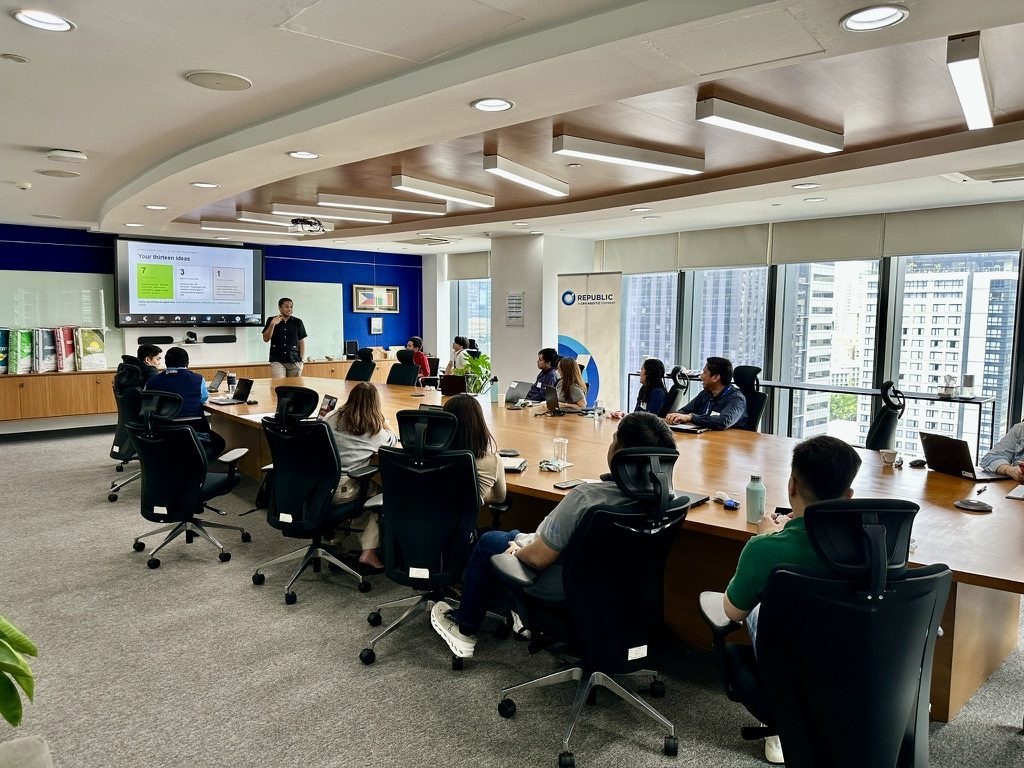
Jerry reviewed the proposed agents before the session and assessed which could realistically be built during the workshop, which needed to be reshaped, which required capabilities beyond the first version, and which problems might be better solved with another tool.
The objective was not simply to talk about AI agents. Participants would work on the actual AI-agent ideas they had submitted and aim to leave with a working Version 1.
Customized implementation guides for each participant
The pre-work did not stop at collecting ideas. Jerry prepared customized guidance to help participants think through how their own agents could be implemented: the specific job the agent should perform, the knowledge or files it would need, business rules and guardrails, the manual process steps that should be encoded, the expected output, exceptions and failure conditions, and what could realistically be built on Day 1 versus added later.
One Supply Chain use case, for example, involved a Delivery Exceptions Agent. The customized handout translated the participant's idea into a practical Day-1 build: the files the agent would need, what it should and should not do, the step-by-step workflow, required output, rules and constraints, exception handling, validation checks, safety considerations, and what could be built now, next, and later. (For the full map of where AI helps a supply chain team — from forecasting and procurement to delivery exceptions — see AI for Supply Chain in the Philippines.)
This made the workshop more personal and practical. Instead of asking participants to apply a generic example to their work afterward, the workshop began with their work already on the table.
The build framework: turning business judgment into an AI agent
During the workshop, participants learned how to define five important parts of an AI agent:
- Job. What exactly should the agent do?
- Knowledge. What files, SOPs, reports, or approved sources should the agent use?
- Rules. What should the agent always do, never do, and how should it handle missing or inconsistent data?
- Steps. How would an experienced employee perform the work manually?
- Output. What should the finished result look like?
The workshop emphasized that building the agent in Microsoft Copilot was the easy part. The harder and more valuable work was making the thinking explicit: the judgment, rules, exceptions, and steps experienced people normally carry in their heads.
Participants built their own Microsoft Copilot agents during the workshop
After the framework and demonstration, the AI Champions were given time to build the first versions of their own agents using Microsoft Copilot Agent Builder. The workshop objective was intentionally practical: leave with Version 1 working.
Participants filled out their agent specifications, created their agents, tested them, and began refining the instructions. The session emphasized that a first build should not be expected to be perfect. Agents need to be tested, corrected, and improved over time.
By the end of the session, most participants had completed at least a first working run of their agents.
A supply chain reporting agent cut a daily task from ~40 minutes to under 5
One AI Champion built a Microsoft Copilot agent around a recurring daily supply-chain reporting task. The agent was designed to work from operational files such as dispatch and open-order reports, analyze delivery status, identify late or urgent deliveries, and generate a structured update.
During the workshop, the participant demonstrated the agent using actual working files and checked the output against the source data. The delivered-sales information produced by the agent matched what she expected from the underlying reports.
She explained that preparing the report manually normally took around 40 minutes every day. With the Microsoft Copilot agent she built during the workshop, the same type of work could be completed in under five minutes.
The significance was not just the one-time speed improvement. Because the task is performed every day, the time saving can recur every working day, while the employee remains responsible for reviewing and validating the output.
The agent did not replace the employee's judgment. It removed much of the repetitive analysis needed to prepare the report.
Another participant turned a monthly report into an AI-assisted workflow
A second participant demonstrated an agent designed to help analyze operational KPIs and generate a structured report. When asked how long the work normally took, the participant said approximately one hour, produced on a monthly basis.
This was a smaller recurring impact than the daily supply-chain example, but it reinforced the same principle: work that follows a repeatable analytical process can often be turned into a reusable AI workflow instead of being reconstructed manually every time.
The bigger outcome: building internal AI capability
The Republic Cement story is not simply about saving time on one report. The more important outcome is capability-building.
The company had already created a group of internal AI Champions. The workshop equipped those champions with a repeatable way to identify a use case, define the work clearly, translate business judgment into rules and steps, build a first AI agent in Microsoft Copilot, test it, refine it, and eventually share useful agents with others.
This creates a different model from relying on a small central technical team to invent every AI use case. The people closest to the work can begin identifying opportunities themselves. They still need appropriate IT, security, governance, and business oversight. But they are no longer limited to simply using AI.
They can begin designing how AI should work inside their own roles and processes.
Why Microsoft Copilot matters
Many enterprises already operate inside Microsoft 365. Their people may already have access to Copilot. But having access to AI does not automatically mean the organization is getting meaningful value from it. A common progression looks like this:
Copilot chat → better prompting → reusable prompts → business-specific Copilot agents → more advanced workflows and integrations
Republic Cement's AI Champions workshop focused on that next practical step: moving from asking Copilot questions to designing reusable AI capabilities around real work.
For organizations already investing in Microsoft Copilot, the opportunity is often not to buy another tool. It is to ask: are we using the capabilities we already have deeply enough?
Key outcomes
- Republic Cement invited Jerry Ilao back for a more advanced AI engagement after an earlier October 2025 workshop for HR managers and directors.
- The July 2026 engagement focused specifically on helping the company's AI Champions build practical AI agents using Microsoft Copilot.
- Participants submitted their desired AI-agent use cases before the workshop, and Jerry reviewed them in advance and prepared customized implementation guidance.
- Participants learned a structured framework for defining each agent's job, knowledge, rules, steps, output, and guardrails.
- AI Champions built and tested first working versions of their own Microsoft Copilot agents during the session.
- One recurring daily supply-chain reporting task went from approximately 40 minutes manually to under five minutes using an agent built during the workshop.
- Another monthly reporting use case that normally took about one hour was converted into an AI-assisted workflow.
- Participants moved beyond basic AI chat use toward reusable, business-specific AI capabilities.
What other large companies can learn from Republic Cement
A lot of enterprise AI adoption starts with tool access. Employees receive Copilot. Training happens. People begin experimenting. But eventually another question appears: how do we turn individual AI usage into organizational capability?
Republic Cement's approach illustrates one possible path:
Identify internal champions → collect real business use cases → assess what is feasible → teach a repeatable design framework → build Version 1 in Microsoft Copilot → test on real work → improve and scale what proves useful
The objective is not to build the most sophisticated AI system on Day 1. It is to start creating useful internal AI capability that the organization can continue developing after the workshop ends.
For a map of where AI-assisted reporting and Agents like these fit across a manufacturing operation — 15 practical use cases from shift handovers and downtime analysis to maintenance, quality, and plant management — see AI for Manufacturing in the Philippines.
About this case study
What was the Republic Cement Microsoft Copilot workshop about?
How was the workshop customized?
What results did participants get during the workshop?
Had Jerry Ilao worked with Republic Cement before this workshop?
The next question is what you build with it
Jerry Ilao's advanced Microsoft Copilot workshops are designed for companies that want to move beyond basic chat and prompting. The sessions help managers, AI Champions, and business teams identify practical AI-agent opportunities, translate real work into agent specifications, define knowledge, rules, guardrails, and workflows, build first working agents in Microsoft Copilot, and test them on real business use cases. The workshop can be customized around participants' actual AI-agent ideas before the session.
Don't just teach your people how to use Copilot. Help them start building with it.